August 24,2026
The automotive industry is undergoing a fundamental transformation. With the rapid shift toward electrification, vehicles are becoming quieter, more complex, and more efficient than ever before. At the heart of this evolution lies a critical component that often goes unnoticed: the automotive bearing. As internal combustion engines give way to electric drivetrains, the demands on bearings have intensified, requiring greater precision, lower friction, and enhanced durability.
From the high-speed rotation of EV motors to the tactile feedback of electric power steering, bearings are the silent enablers of modern mobility. Below, we explore the key applications of automotive bearings in electric vehicles and how the right bearing solutions can optimize performance across drive, steering, and auxiliary systems.

The most significant change in electric vehicles is the propulsion system. Unlike traditional engines, EV motors operate at exceptionally high rotational speeds and generate substantial heat. Bearings in this application must withstand extreme conditions while minimizing energy loss to maximize driving range.
EV Motor Bearings are subject to high speeds, electrical current, and thermal stress. A critical challenge in EV motors is electrical corrosion. Stray currents from the inverter can pass through the motor bearings, causing electrical discharge machining (EDM) that damages raceways and reduces bearing life. To combat this, modern EV applications often utilize ceramic hybrid bearings or bearings with insulated coatings that break the electrical path, preventing premature failure.
E-Axle Drivetrain Bearings integrate the motor, power electronics, and transmission into a single compact unit. This consolidation demands bearings that offer high load capacity and rigidity in a limited space. Precision deep groove ball bearings and cylindrical roller bearings are commonly used to support the high-speed rotating shafts within the e-axle, ensuring smooth torque transfer and mechanical efficiency. The push for efficiency has also accelerated the adoption of low-friction designs and lightweight materials to reduce parasitic losses and improve overall vehicle range.
For high-performance and reliability in EV drive systems, explore our range of precision-engineered deep groove ball bearings and specialized solutions for demanding applications.
Steering technology has evolved dramatically, shifting from hydraulic assistance to Electric Power Steering (EPS) and, increasingly, Steer-by-Wire systems. This transition places new demands on bearings, which must provide precise control, low noise, and high reliability.
In Electric Power Steering (EPS) systems, bearings are used in the steering column, intermediate shafts, and the motor itself. The requirements are stringent: they must have low starting torque to ensure responsive steering feel, minimal axial run-out for precision, and a long service life. Double-row angular contact ball bearings are often specified in EPS units because they can handle both radial and axial loads while offering the high stiffness and low noise needed for a comfortable driving experience. For compact spaces, thin-section ball bearings provide a space-saving solution without compromising performance.
Steer-by-Wire systems are the next frontier, completely decoupling the steering wheel from the wheels. Bearings in these systems are even more critical as they provide the necessary precision for feedback actuators and road wheel actuators. These bearings must offer ultra-low friction, exceptional reliability, and high-precision movement to ensure the driver receives accurate tactile feedback.
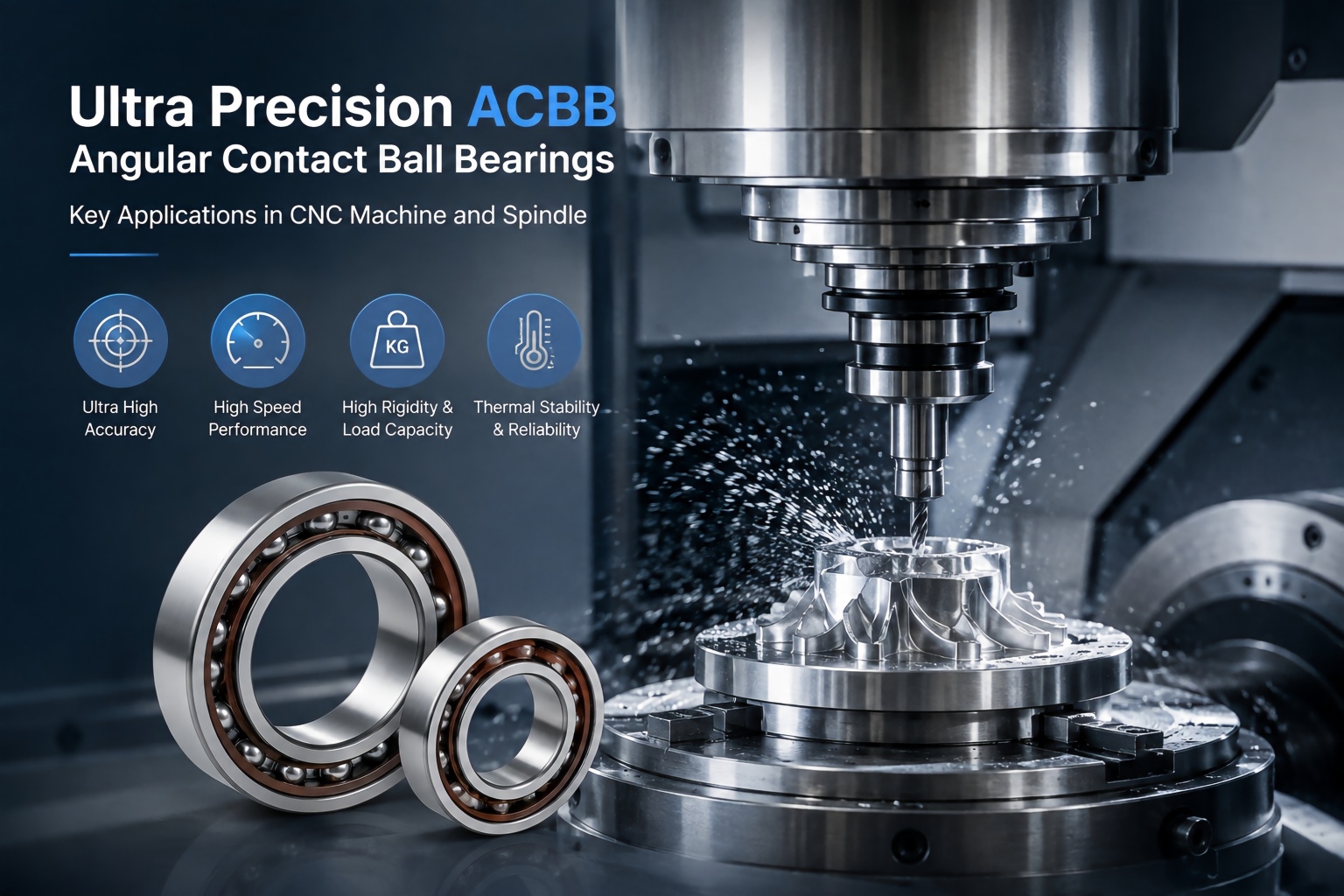
At fit4ubearing.com, we understand the unique requirements of modern steering systems. Our selection of angular contact ball bearings is designed to deliver the precision and durability that EPS and autonomous driving systems demand.
Beyond the drivetrain and steering, a modern vehicle relies on a host of auxiliary systems that contribute to comfort, safety, and convenience. These systems, ranging from electric seat adjusters and window motors to climate control fans, depend heavily on small, reliable bearings.
Auxiliary system bearings are typically miniature deep groove ball bearings characterized by their low noise, low vibration (low NVH), and low starting torque. While these applications may not face the same high speeds or loads as the drivetrain, they are often situated in areas with varying temperatures and require long-lasting, maintenance-free operation.
The shift to EVs has also impacted these systems. For instance, electric air conditioning compressors now run on high-voltage electricity and operate at higher speeds than their belt-driven ICE counterparts. This necessitates bearings capable of handling higher speeds and electrical isolation in some cases. The cumulative effect of improved bearing performance in all these small motors significantly enhances the overall quality and acoustic comfort of the vehicle interior.
For reliable performance in a wide array of automotive auxiliary systems, our range of miniature ball bearings offers the low noise and high precision required to meet the demands of modern vehicle design.

| Application | Bearing Type | Key Requirement |
|---|---|---|
| EV Motor | Deep Groove Ball Bearing | High speed, low noise |
| Gearbox | Cylindrical Roller Bearing | High radial load |
| Steering System | Precision Ball Bearing | Low friction |
| Cooling System | Miniature Bearing | Long service life |
As the automotive landscape continues to evolve toward electrification and automation, the role of bearings has become more strategic than ever. They are no longer just components that reduce friction; they are precision-engineered solutions that enable higher efficiency, ensure safety, and enhance driving comfort. From withstanding the electrical and thermal challenges of EV motors to delivering the precise feel in a steer-by-wire system, bearings are integral to the next generation of vehicles.
Choosing the right bearing for the application is crucial to achieving optimal performance and longevity. Whether for a high-speed EV motor, a precise steering column, or a quiet auxiliary motor, the bearing is an investment in reliability.
Q1: What bearings are used in electric vehicles?
A: EV motors, gearboxes and auxiliaries mainly use deep groove ball bearings, angular contact bearings, cylindrical roller bearings and insulated bearings.
Q2: Why do EV motors need special bearings?
A: EV motors run at higher speeds and may pass electrical currents through the bearing. Special bearings with insulation, optimized lubrication and low vibration are therefore required.
Q3: How do automotive bearings improve EV efficiency?
A: Low-friction bearings reduce mechanical losses, helping improve overall vehicle energy efficiency and driving range.
For media inquiries, please contact:
Mighty Way Industrial Limited (MTWB)
Email: sales@mtwbearing.com
Website: www.mtwb-customized-bearing.com
Address: Room 13-15, 19/F, Nan Fung Centre, 264-298 Castle Peak Road, Tsuen Wan, N.T., Hong Kong