August 07,2026
Industry leaders unveil advanced bearing technologies at Agritechnica 2025 as agricultural sector faces growing equipment demands
The global agricultural bearings market continues to evolve rapidly, driven by technological innovation and the increasing mechanization of farming operations worldwide. At the forefront of this transformation, the Agritechnica 2025 exhibition in Germany showcased significant advancements from major bearing manufacturers, while downstream challenges and emerging application requirements reshape the competitive landscape.
Leading bearing manufacturers unveiled new products specifically engineered for the harsh conditions of agricultural operations at Agritechnica 2025, focusing on two critical performance metrics: durability and efficiency.
SKF introduced the Agri Hub T400, a bearing unit designed specifically for disc harrow applications. The new product features a sealing system with four times the contaminant exclusion performance of conventional designs, effectively protecting against soil, dust, and other agricultural pollutants. Field testing has demonstrated exceptional durability, with the Agri Hub T400 achieving 10,500 hours of operational life. Additionally, SKF's DuraPro deep groove ball bearings for tractor powertrain applications reportedly offer more than double the service life of standard bearings .
Schaeffler focused on efficiency improvements with its new X-life tapered roller bearing series. Through design optimization, the X-life bearings achieve 75% lower friction and 25% higher dynamic load carrying capacity compared to previous generations. The company also showcased electric actuators designed to replace hydraulic systems, along with motor and sensor solutions supporting the electrification of agricultural machinery .
The global agricultural bearings market continues to expand, though projections vary. Industry estimates for 2026 range from approximately $1.8 billion to $2.635 billion, with consensus pointing to sustained growth. The Asia-Pacific region has emerged as the largest market, driven by increasing agricultural mechanization. In terms of applications, harvesters represent the largest segment, accounting for over 30% of agricultural bearing demand .
However, downstream agricultural machinery users face significant financial pressures that could impact future market dynamics. U.S. Midwest farmers are grappling with high input costs and low crop prices, while equipment cost increases and tariff-related trade disputes compress profit margins. These economic headwinds may constrain equipment purchasing and replacement cycles, potentially moderating bearing market growth in the near term .
The agricultural bearings market is evolving as modern farming equipment becomes larger, faster, more automated, and increasingly exposed to demanding field conditions. Tractors, precision seeders, planters, harvesters, and other agricultural machinery require bearings that can handle higher loads, resist contamination, extend maintenance intervals, and meet increasingly specific OEM design requirements. In 2026, four major trends are shaping the development of agricultural bearing technology: higher load capacity, advanced sealing, longer maintenance intervals, and customized bearing solutions.
The increasing size and operating speed of modern agricultural machinery are placing greater demands on bearing load capacity and structural reliability. Heavy-duty tractors, high-speed seeders, large harvesters, and advanced tillage equipment can generate substantial radial, axial, and impact loads during field operation.
Agricultural bearings therefore need to provide reliable performance under continuously changing and sometimes severe loading conditions. Engineers are paying greater attention to radial load capacity, axial load capacity, impact resistance, and dynamic load rating when selecting bearings for agricultural applications.
Higher dynamic load ratings can contribute to longer bearing service life under continuously rotating conditions, while adequate static and impact load capacity is particularly important for machinery operating over uneven terrain or encountering sudden shock loads. Bearing selection must therefore consider not only nominal load but also actual field conditions, operating speed, vibration, and equipment duty cycles.
For heavy-duty agricultural machinery, manufacturers are increasingly adopting optimized raceway geometry, improved bearing materials, advanced heat treatment, and application-specific internal designs to achieve higher load capacity without unnecessarily increasing bearing size.
Contamination remains one of the most significant causes of premature agricultural bearing failure. Bearings used in seeders, planters, disc harrows, and harvesting machinery can be exposed to soil, dust, crop debris, water, mud, fertilizer, and other contaminants.
As agricultural equipment increasingly operates in challenging environments, advanced sealing technology is becoming a key factor in agricultural bearing design. Depending on the application, manufacturers may use triple-lip seals, multi-lip seals, contact seals, or other enhanced sealing configurations to improve contaminant exclusion.
Effective sealing helps prevent fine dust and soil particles from entering the bearing while retaining lubricant inside the bearing cavity. Improved dust protection and water resistance are particularly important for no-till farming equipment, where bearings can operate close to the soil surface and experience continuous exposure to dust, crop residue, moisture, and mud.
For equipment exposed to frequent washing or wet agricultural environments, sealing performance must also be evaluated under water spray, pressure washing, and repeated temperature and humidity changes. The objective is not simply to create a tighter seal, but to achieve an appropriate balance between contamination protection, friction, heat generation, and service life.
Agricultural machinery often operates far from maintenance facilities and may need to work continuously during critical planting and harvesting seasons. Unexpected bearing maintenance or failure can result in equipment downtime, delayed field operations, and increased operating costs.
As a result, the demand for maintenance-free agricultural bearings and longer service intervals continues to grow. Sealed-for-life bearing designs, optimized internal lubrication, and high-performance long-life grease can reduce the need for frequent relubrication during normal operating conditions.
Sealed-for-life bearings are particularly attractive for applications where access to the bearing is difficult or where regular greasing is inconvenient. By combining effective sealing with application-specific grease selection, manufacturers can help reduce lubricant loss and prevent external contaminants from entering the bearing.
The goal is not necessarily to eliminate maintenance under every operating condition, but to extend service intervals and reduce unnecessary relubrication. For OEMs, this can simplify maintenance schedules, reduce operating costs, and improve overall equipment availability.
Standard bearing dimensions cannot always satisfy the increasingly specialized requirements of modern agricultural equipment. OEMs may have limited installation space, unique load conditions, specialized sealing requirements, or specific lubrication and material requirements.
This is driving greater demand for customized agricultural bearings designed around the actual operating conditions of the machine.
Customization may include non-standard dimensions, application-specific internal geometry, customized seals, special lubrication, and special materials. Depending on the equipment design, an OEM may require a specific bearing width, mounting configuration, internal clearance, sealing arrangement, corrosion-resistant material, or grease formulation.
Customized solutions can also help OEMs optimize bearing performance without simply selecting an oversized standard bearing. By considering load, speed, temperature, contamination, installation constraints, and expected service life together, bearing manufacturers can develop a more application-specific solution.
For agricultural equipment manufacturers, this trend is increasing the importance of OEM bearing solutions that combine product customization with engineering support. A capable bearing supplier can work with the OEM from initial design and prototype development through testing, small-batch production, and final mass production.
The agricultural bearings market in 2026 is moving toward solutions that provide more than basic rotational support. Higher load capacity, advanced contamination protection, longer maintenance intervals, and application-specific customization are becoming increasingly important factors in bearing selection.
For OEMs, the most effective approach is to evaluate the complete operating environment—including load, speed, impact, contamination, moisture, lubrication, temperature, available installation space, and maintenance requirements—before selecting a bearing configuration.
MTWB supports agricultural equipment manufacturers with customized bearing solutions designed around specific application requirements, helping OEM customers balance load capacity, sealing performance, service life, maintenance requirements, and installation constraints.
In regions such as Brazil and Argentina, where no-till farming is widely adopted, agricultural equipment operates at higher speeds and under heavier loads than conventional farming systems. This operational environment places elevated demands on bearing impact resistance and sealing performance .
Field data indicates that bearings with triple-lip seal designs achieve 700 to over 1,000 hours of service life under severe operating conditions—several times the 200 to 350 hours typically obtained from standard bearing configurations .
Why Agricultural Machinery Requires Specialized Bearings
| Operating Condition | Bearing Requirement |
|---|---|
| Soil and dust | Effective sealing |
| Water and moisture | Corrosion protection |
| Fertilizer exposure | Chemical resistance |
| Shock loads | High static load capacity |
| High-speed operation | Optimized internal design |
| Limited maintenance | Long-life lubrication |
| Field vibration | High structural reliability |
As agricultural equipment becomes more specialized, demand for application-specific bearing solutions is rising. MTWB (Mighty Way Industrial Limited) recently launched a new official website at www.mtwb-customized-bearing.com designed to streamline global OEM bearing sourcing. The platform provides procurement managers, mechanical engineers, and equipment manufacturers with access to engineering capabilities, precision bearing products, and custom solution services .
MTWB offers customized agricultural bearing solutions for demanding applications, including the 6810-2RS bearing designed for Kverneland seeder applications. The optimized design features improved load capacity, supporting both radial and axial loads for more stable seeding disc rotation. Dynamic load rating increased from 13.2 kN to 18.0 kN, while static load rating improved from 12.2 kN to 28.0 kN, providing enhanced performance compared to standard single-row configurations .
With over 18 years of manufacturing experience and support for more than 100 global OEM customers, MTWB provides custom bearings manufactured to ISO 9001 and ABEC/P6 or higher precision grades. The company's customized bearing solutions include non-standard dimensions, special materials or seals, and small-batch prototype orders. MTWB serves the agriculture industry alongside textile, steel, cement, and marine equipment sectors .

| Feature | Standard Bearing | Customized Bearing |
|---|---|---|
| Dimensions | Standardized | Application-specific |
| Sealing | Standard seal | Customized seal |
| Lubrication | Standard grease | Application-specific grease |
| Load Requirements | General | Optimized for equipment |
| Contamination Protection | Standard | Enhanced options |
| OEM Integration | Limited | Designed for OEM systems |
| Prototype Support | Usually limited | Available |
The agricultural bearings market is poised for continued growth, though the pace of expansion will depend significantly on the overall health of agricultural machinery demand. Industry participants that offer enhanced durability, improved efficiency, and application-specific customization are likely to benefit from evolving customer requirements. The ability to address sealing challenges in severe operating environments, particularly in no-till farming applications, represents a key competitive differentiator.
Common Question
Agricultural bearings are specialized bearing components designed for farming machinery such as tractors, seeders, planters, harvesters, disc harrows, and other agricultural equipment. They are typically engineered to withstand dust, soil, moisture, shock loads, vibration, and extended outdoor operating conditions.
The major challenges include soil and dust contamination, water and moisture, fertilizer exposure, impact loads, vibration, high operating speeds, and limited access for routine maintenance.
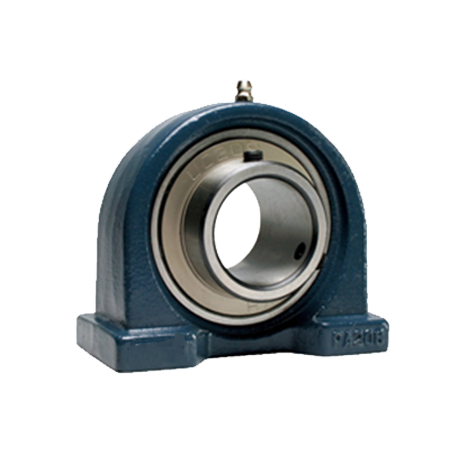
Agricultural machinery commonly uses deep groove ball bearings, tapered roller bearings, spherical roller bearings, insert bearings, bearing units, and application-specific customized bearing assemblies.
Effective sealing helps prevent soil, dust, water, and other contaminants from entering the bearing, reducing lubricant degradation and premature raceway and rolling-element damage.
Yes. Customized agricultural bearings can be engineered with application-specific dimensions, seals, materials, lubrication, internal clearances, and load capacity to meet OEM equipment requirements.
For media inquiries, please contact:
Mighty Way Industrial Limited (MTWB)
Email: sales@mtwbearing.com
Website: www.mtwb-customized-bearing.com
Address: Room 13-15, 19/F, Nan Fung Centre, 264-298 Castle Peak Road, Tsuen Wan, N.T., Hong Kong